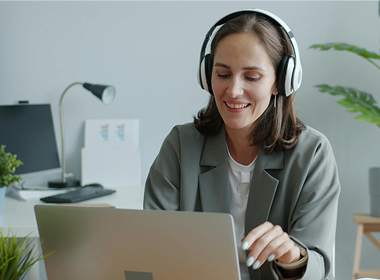

Work from home tax deductions 2025–26: What can you claim?
If you worked from home during 2025–26, you can claim your running expenses through the Australian Taxation Office (ATO) using either the fixed rate method (70 cents per hour) or the actual cost method based on your work-related expenses. The best option depends on your total hours, utility usage, and the quality of your record-keeping.
With the 2 November 2026 self-lodgement deadline approaching, now is the time to gather your receipts and review your options. Here is a breakdown of how each method works, what qualifies for a deduction, and the records required to lodge your return.
By the end of this blog post, you will know what counts as a genuine work-from-home expense, how the fixed rate and actual cost methods compare, what records you need to support your claim, and what the new standard deduction for work-related expenses means for future returns.
Key takeaways
The ATO's fixed rate for 2025–26 stays at 70 cents per hour, unchanged from last year.
Self-lodgement is due Monday, 2 November 2026, since 31 October falls on a Saturday.
You must pick either the fixed rate or the actual cost method, not mix both for the same expense.
Fixed rate bundles electricity, gas, phone, internet, and stationery into the 70c rate.
The actual cost method needs receipts, invoices, and proof of work-related usage percentages.
Only the work-related portion of a bill is deductible, not private use.
The new standard deduction of up to $1,000 for work-related expenses starts from 2026–27 and is not a special $1,000 work-from-home deduction.
What are work-from-home tax deductions in Australia?
Not every expense you incur at home qualifies as a tax deduction, and not everyone who occasionally sends a work email from the couch qualifies to claim at all. To claim working from home expenses, you must meet all of the following conditions:
- You are working from home to fulfil actual employment duties
- You have incurred additional running expenses as a direct result
- You have records that prove those expenses were incurred
The ATO draws a clear line between incidental home working and genuine remote or hybrid arrangements. If your employer has a physical office you regularly attend, but you sometimes work from home by choice, you can still claim, but only for the hours you were genuinely performing employment duties from home, not hours spent on breaks or personal tasks.
It is also worth understanding what "additional" expenses mean in this context. The ATO is not interested in costs you would have incurred anyway. It is the extra cost attributable directly to your work that counts, which means apportioning bills based on actual usage:
- Your existing electricity bill does not count; only the extra usage from working at home does.
- A home internet plan you already pay for is not claimable on its own; only the work-related portion is.
Fixed monthly fee for
a defined scope of services
Many clients appreciate having bookkeeping and tax services under one roof, while also enjoying the predictability of a fixed fee. Below is our indicative fee for a standard scope of work:
 Cancel anytime
 Unlimited support
 Quick onboarding
Only Bookkeeping & BAS
Only bookkeeping and BAS (Does not cover tax returns, payroll and super):
$165/month *ex GST
Bookkeeping & Tax combined
For bookkeeping, BAS and tax returns (but no payroll or super included):
$225/month *ex GST
Bookkeeping, Tax & Payroll
All inclusive package: Bookkeeping, BAS, payroll, Super and tax returns:
$280/month *ex GST
The ATO's two methods for claiming tax deductions for work from home
There are two methods available to calculate your working from home claim:
- The fixed rate method and
- The actual cost method
Each one calculates your deduction differently and suits different work setups, so before deciding which applies to you, here's a quick overview of how they compare.
Fixed rate vs actual cost: which method should you use?
| Fixed rate vs actual cost: which method should you use? | ||
|---|---|---|
| Factors | Fixed rate method | Actual cost method |
| Rate/basis | 70c per hour worked from home | Actual work-related portion of real expenses |
| Best for | No dedicated home office, simpler paperwork | Dedicated home office, high running costs |
| Covers | Electricity, gas, phone, internet, stationery — all bundled | Each expense is claimed individually at its real cost |
| Claim separately | Depreciation on equipment (chairs, desks, computers) | Nothing extra — everything is itemised already |
| Record needed | Actual hours for the full year + one bill per expense category | Actual hours + every receipt/invoice + usage percentage evidence |
| Occupancy costs (rent/mortgage interest) | Not included | Claimable only in limited circumstances |
The fixed rate method: 70 cents per hour explained
The fixed rate deduction method is the simpler of the two methods and works well for people who do not have a dedicated home office or prefer not to track every individual bill. You can claim a fixed rate of 70 cents for each hour you work from home during the 2025-26 income year.
What the 70 cent rate covers — you cannot claim these separately:
- Home and mobile internet or data expenses
- Mobile and home phone usage expenses
- Electricity and gas for heating, cooling, and lighting
- Stationery and computer consumables such as printer ink and paper
What you can still claim separately on top of the fixed rate:
- The decline in value of depreciating assets such as chairs, desks, computers, and bookshelves
- Repairs and maintenance of those items
If an item costs $300 or less and you use it mainly for work purposes, you can generally claim an immediate deduction where the relevant tax rules allow it. Items costing more than $300 may generally need to be depreciated over time.
One important point that many people miss: If you use your mobile phone for work purposes on days when you are not working from home, you cannot claim a separate deduction for those mobile phone expenses under the fixed rate method. If you want to claim all of your work-related mobile phone expenses, you will need to switch to the actual cost method.
The actual cost method: Claim every dollar you spend
This method takes more effort but often delivers a larger deduction, especially if you work from home frequently and have a space set aside purely for work.
Using the actual cost deduction method, you work out your deduction by calculating the actual additional expenses you incur when working from home during 2025-26.
What you can claim under the actual cost method:
- The decline in value of depreciating assets such as home office furniture, desks, chairs, phones, computers, and laptops
- Electricity and gas for heating, cooling, and lighting
- Home and mobile phone, data, and internet expenses
- Stationery and computer consumables such as printer ink and paper
- Cleaning costs for your dedicated home office
An important rule on apportionment: Where you incur running expenses for both private and work purposes, you need to separate the two on a fair and reasonable basis. You can only claim the work-related portion as a deduction.
A household rule worth knowing: You cannot claim additional running expenses if other members of your household who are not working from home are in the same room as you while you are working. For example, if you are working from the lounge room while your family watches television, you cannot claim heating or lighting costs for that room.
Phone and internet: where appropriate, a representative continuous 4-week usage period can help establish work-related use for phone and internet costs, but this is different from the requirement to keep actual records of the hours worked from home.
Not sure which method is right for you?

Book a call now
What working-from-home expenses are tax-deductible?
Not every cost you incur at home during work hours qualifies. The ATO is specific about what counts as an additional running expense and what does not. Here is a clear breakdown for the 2025-26 income year.
Running expenses you can claim
These are expenses you can claim as a direct result of working from home:
- Electricity or gas for heating, cooling and lighting in the area you work from
- Home and mobile internet or data expenses
- Mobile and home phone expenses
- Stationery and office supplies
- The decline in value of depreciating assets you use for work, such as office chairs, desks, computers, laptops, and software
- Repairs and maintenance of those depreciating assets
If you have a dedicated home office, you may also be able to claim:
- Occupancy expenses such as mortgage interest or rent
- Cleaning expenses for the room used as your home office
These occupancy expenses are only available in limited circumstances. As an employee working from home, you generally cannot claim occupancy expenses unless your home has an area that genuinely functions as a place of business and the relevant conditions are met.
If you do qualify to claim mortgage interest as a deduction, there can be capital gains tax implications when you eventually sell your home. Obtain professional tax advice before making an occupancy claim.
What expenses can you not claim?
The ATO is equally clear about what falls outside the scope of a legitimate work-from-home deduction. You cannot claim:
- Coffee, tea, milk, or other general household items, even if your employer supplies these at a physical workplace
- Equipment or subscriptions purchased for your children's education, such as iPads, desks, or online learning platforms
- Items your employer has provided to you, such as a work laptop or mobile phone
- Any expense your employer has already reimbursed you for
- Additional running expenses for a room where other household members who are not working from home are present at the same time. For example, if you work from the lounge room while your family watches television, you cannot claim the heating or lighting for that room
One more rule worth noting: If your employer pays you an allowance to cover your working-from-home expenses, that allowance must be declared as income on your tax return. You can then claim the actual expenses against it, but you cannot ignore the allowance and claim the expenses as though you paid them entirely out of pocket.
What is the new $1,000 work-related expense deduction?
The Australian Government has introduced a new standard deduction of up to $1,000 for work-related expenses from 1 July 2026. It is not a $1,000 work-from-home deduction and it does not apply to the 2025–26 return.
What is it? A standard deduction of up to $1,000 for eligible Australian tax residents with work income, subject to the new rules.
Does it apply this year? No. The current fixed-rate and actual-cost working-from-home methods apply to your 2025–26 return.
Is it $1,000 back in your pocket? No. A deduction reduces taxable income. The actual tax benefit depends on your circumstances.
Who benefits? The new standard deduction is designed to simplify claims where eligible work-related expenses are below the standard amount, while existing arrangements remain relevant where expenses exceed $1,000.
Should you stop keeping records? No. Keep records so you can determine which method gives you the appropriate result and to support claims not covered by the standard deduction.
Record-keeping requirements for work-from-home tax deductions
Good records are not optional. If you do not have the right documentation to support your claim, the ATO expects you not to claim the expense at all. Here is exactly what you need to have ready depending on the method you use.
Fixed rate method record-keeping requirements
You will need:
- A record of all the hours you worked from home for the entire income year, such as timesheets, rosters or a diary
- Evidence that you paid for the expenses covered by the fixed rate method, for example, if you use your phone and electricity when you work from home, keep at least one bill for each of these expenses
- Records for any depreciating assets you claim as a separate deduction, such as a computer or office furniture
Actual cost method record-keeping requirements
You will need:
- A record of all the hours you worked from home for the entire income year, kept as you go, such as timesheets, rosters, or a diary
- Evidence for every expense you claim, including receipts, bills or invoices that show the supplier, amount of the expense, nature of the goods, date it was paid and date of the document
- Evidence of your personal and work-related use of the items or services you buy and use
Note: In most cases, a bank or credit card statement on its own is not enough evidence of a work-related expense under either method.
Claiming decline in the value of assets (both methods)
For any depreciating asset you claim, you will also need records showing:
- When and where you bought the item and its cost
- When you started using the item for a work-related purpose
- How you worked out your percentage of work-related use, such as a diary showing the purpose and use of the item for work
- Which method did you choose to work out the decline in value
If your 2025-26 records aren't complete, don't wait until lodgement day to find out. Our professional bookkeepers can help you pull together what you have, work out what's claimable, and get your records in order for next year so you're not in the same position again.
Explore our other helpful reads



Common mistakes when claiming work-from-home tax deductions
Even well-intentioned taxpayers make errors that reduce their refund, increase their audit risk, or both. These are the ones our business tax return professionals see most regularly.
Mistake 1: Claiming employer-provided equipment.
If your employer gave you a laptop, monitor, headset, or phone to use for work, you cannot claim the decline in value of that equipment. You did not purchase it, and it is not yours to depreciate.
Mistake 2: Overstating work use without evidence.
A computer used 80% for personal purposes, and 20% for work, can only generate a deduction on that 20% work-related fraction. The same principle applies to phone, internet, and electricity. The ATO scrutinises apportionment claims, and inflated percentages without documented evidence are a compliance risk.
Mistake 3: Defaulting to the fixed rate without comparing both methods.
Many taxpayers choose the fixed rate method simply because it involves less paperwork, without ever checking whether actual costs would produce a meaningfully larger refund. This is particularly costly for people with high electricity bills, expensive work equipment or a dedicated home office.
Mistake 4: Claiming the same expense twice.
Some taxpayers accidentally claim an expense under the fixed rate and then attempt to claim it again as a separate deduction. For example, claiming internet costs as part of the 70-cent hourly rate and then listing it again as an additional expense. Each expense can only be claimed once and only through one method.
Mistake 5: Forgetting to declare a working-from-home allowance as income.
If your employer pays you an allowance specifically to cover your working-from-home costs, that amount must be declared as income on your return before you claim any expenses against it. Skipping this step and claiming expenses as though you paid them entirely out of pocket is an error the ATO picks up regularly during reviews.
Get experts' help claiming your work-from-home tax deductions
Most Australians who work from home are either claiming too little because they do not know what they are entitled to, or claiming incorrectly because they picked the wrong method without comparing both options. Either way, they are losing money that should rightfully come back to them at tax time.
Here is what working with CleanSlate looks like in practice:
- We compare the fixed-rate and actual-cost methods using your circumstances rather than assuming one method is always better.
- We help identify legitimate deductions and the records needed to support them.
- We help organise your records so your return can be prepared with the appropriate evidence.
- We take your actual working arrangements into account rather than relying on generic assumptions.
- We can prepare and lodge your tax return as your registered tax agent, subject to the applicable engagement and lodgement rules.
Tax time does not have to be stressful or uncertain. With our tax experts handling your work-from-home deductions and lodgement, you get clarity on what you are owed, confidence that everything is correct, and more time to focus on what actually matters to you.
Ready to claim every dollar you are entitled to? Get in touch with our team today, and we will make sure your 2025–26 tax return is handled correctly, completely, and with your maximum refund in mind.
Tax deduction for work from home FAQs
Am I allowed to claim for "work clothes" like loungewear or activewear?
No. While many Australians have swapped suits for more comfortable attire while working from home, you cannot claim a deduction for "conventional clothing." This includes tracksuits, leggings, or even business shirts worn for video calls. To claim a clothing deduction, the items must be protective (like high-vis gear), occupation-specific (like a chef's checkered pants), or a compulsory, registered uniform.
Can I claim the decline in value on a second-hand desk or chair?
Yes, but only if you actually paid for it. If you bought a used ergonomic chair from an online marketplace, you can claim its decline in value based on what you paid, provided you have a record of the transaction (like a bank transfer or a digital receipt). However, if the furniture was a gift or found on the curb, its "cost" to you was zero, so there is no value to depreciate.
Does the ATO allow claims for "cooling and heating" if I am just using a fan or a small space heater?
Yes. Whether you are running a central ducted system or a small $20 desk fan, these contribute to your electricity usage. Under the Fixed Rate Method, these costs are already "baked into" the 70-cent rate. Under the Actual Cost Method, you would need to know the wattage of the appliance and the cost per kilowatt-hour from your energy bill to calculate the specific work-related cost.
I have a side hustle and a 9-to-5. Can I claim twice?
No. You can only claim the 70-cent fixed rate once per hour, regardless of how many jobs you are doing. The ATO views this rate as covering the cost of the space (power and internet), which doesn't double just because you have two income streams.
- Example: If you work your day job from 9 am to 5 pm, but spend the final hour also answering emails for your side hustle, you only claim one hour for that 4 pm–5 pm slot, not two.
- Total for the day: 8 hours @ $0.70 = $5.60.
What happens if I move house during the financial year?
Moving doesn't stop your claim, but it requires a "clean break" in your records to prove you incurred costs at both locations.
- Fixed Rate Method: Keep your continuous log of hours, but ensure you have at least one utility bill (e.g., electricity or phone) from both your old and new addresses.
- Actual Cost Method: You must perform two separate calculations. Because your new home will have different floor plans and utility rates, you cannot apply the "work-related percentage" from your old house to the new one.
Ready to claim your work-from-home tax deductions?
Choosing between the 70c fixed rate and the actual cost method isn't just about convenience; it can mean hundreds of dollars in your refund. The fixed rate keeps things simple for hybrid workers, while the actual cost method often delivers a bigger claim if you work remotely full-time and carry higher utility bills.
With the 2 November 2026 self-lodgement deadline approaching, pulling together your hours log, bills, and receipts now means you claim every dollar you're owed without costly mistakes.
Need extra time or expert guidance? Don't leave money on the table, or risk a claim that doesn't hold up. As registered tax agents, lodging with CleanSlate may open up an extended deadline of up to 15 May 2027, depending on your circumstances and the ATO's lodgement program.
Book a call with our tax experts today and get your 2025–26 tax return sorted with confidence.