How can you optimise your business's cash flow with proper accounts receivable management?
Good cash flow management is important for all businesses, and it can be even more difficult to navigate when money is tight. Business owners have to ensure that their company’s short-term liquidity requirements are met while trying to maximise their profits.
One of the most vital aspects of successful cash flow management is having an effective accounts receivable process in place. When done properly, you’ll be able to receive payments quickly and efficiently, meaning increased working capital and stronger financial stability overall.
In this blog post, we will look at how proper accounts receivable processes can help optimise your business's cash flow through improved customer service, better timing of billing statements etc., so keep reading if you want key insights on getting the most out of your financial structure!
Key takeaways
Accounts receivable (AR) represents the outstanding amount owed to your business by customers who have made purchases on credit.
Effective accounts receivable management is crucial for optimising your business's cash flow and financial stability.
Common mistakes in accounts receivable management include sales and finance teams not agreeing, excessive manual work, and more.
Outsourcing accounts receivable management to specialised service providers like CleanSlate helps optimising cash flow and reduces internal team burden.
Understanding cash flow and accounts receivable
Cash flow refers to the total amount of money moving in and out of your business, typically categorised into operational, investing, and financing activities. It's crucial for business survival and growth, enabling you to meet obligations, reinvest in your business, and maintain financial stability during unexpected economic downturns.
Accounts receivable represents the outstanding funds owed to your business by customers for products or services rendered. This money, usually collected within a few weeks, is considered an asset and is part of a type of accounting called accrual basis accounting.
You can find this amount in the 'current assets' section of your company's records or the general ledger. It's listed as an asset because it's expected to bring money into your business in the future.
Note: The general ledger shows the total money owed to your company, but for details on each customer's outstanding payments, you'd typically check a specific part of the ledger known as the accounts receivable subsidiary ledger.
The relationship between cash flow and accounts receivable is quite straightforward. Cash flow is the money that's coming in and going out of your business. On the other hand, accounts receivable is the money that customers owe you after buying your goods or services on credit.
Let’s understand this relationship with an example:
Imagine your business has sold a considerable amount of products or services on credit, leading to a substantial amount in accounts receivable. This might make your business look profitable on paper, but what if these customers delay their payments or default completely?
Suddenly, your cash inflow slows down or even stops, even though your outflow (for expenses like wages, rent, and supplies) continues. This situation can lead to a cash shortage, hampering your ability to meet obligations or invest in growth opportunities.
Therefore, efficient management of accounts receivable is crucial for maintaining a steady cash flow and securing the financial well-being of the business.
What is accounts receivable management?
Accounts receivable management is how a company makes sure it gets paid by its customers. This involves making credit rules, keeping an eye on overdue payments, and chasing late payers to keep the money coming in and avoid losses from unpaid debts. This job continues as long as a business customer is connected with the company. It includes tasks like welcoming new customers and checking their credit history, sending out bills, collecting money, making sure the payments match the bills, and dealing with any discounts the customer might request.
Goals of accounts receivable management
The goal of receivable management is not only to boost sales or lessen the risk of not being paid back but to handle loans in a way that grows sales yet keeps risk in check. For a company to increase its worth, it needs to manage its credit sales well to:
- Maximise sales volume: Good credit management can help the company retain existing customers and attract new ones.
- Minimise credit-related costs: These are expenses like maintaining the credit department, losses from unpaid bills, and the cost of money being stuck in unpaid bills.
- Keep the amount of money customers owe the company at an appropriate level: If a company is too lenient with credit, it may boost sales and profits, but the cost of more money being stuck in unpaid bills also rises. So, it needs to find a balance between these costs and benefits.
4 common accounts receivable management problems
Effective accounts receivable management is crucial for steady cash flow. The AR team should proactively identify and solve problems to prevent them from escalating. Understanding common AR management issues can help businesses boost cash flow. Here are 4 most common problems businesses encounter in AR management:
Sales and finance teams not agreeing: When sales and finance teams disagree, it hampers AR management. Sales team seeks increased revenue and may offer risky credit terms, while the finance team aims to reduce unpaid debts. This misalignment causes inefficient credit policies, strained relationships, heightened credit risk, and hindered collections. Resolving the issue necessitates effective communication and a collaborative approach to balance sales objectives with financial stability.
Using legacy systems that created date isolation: Legacy systems usually have different parts that don't connect. Like, one team might use one system for billing and another for managing stock, but these two don't communicate. This leads to separate data sets with varying accuracy and duplicate work.
Inadequately trained workers: Your accounts receivable team may lack the necessary skills for their jobs. Even if they started with the right skills, things have changed. New business methods might have altered their work without giving them the right training. Also, learning to use new cloud-based software or technology might be challenging without proper training, potentially leading to errors or inefficiencies in managing accounts receivable.
Neglecting customer relationships due to late payments: Late-paying customers aren't always problematic. They might be going through financial difficulties due to factors like legal payments or unsettled invoices from their own clients. Economic challenges specific to their industry can also impact their ability to pay on time. By providing support and understanding during these tough times, you have the chance to turn them into loyal customers once they recover.
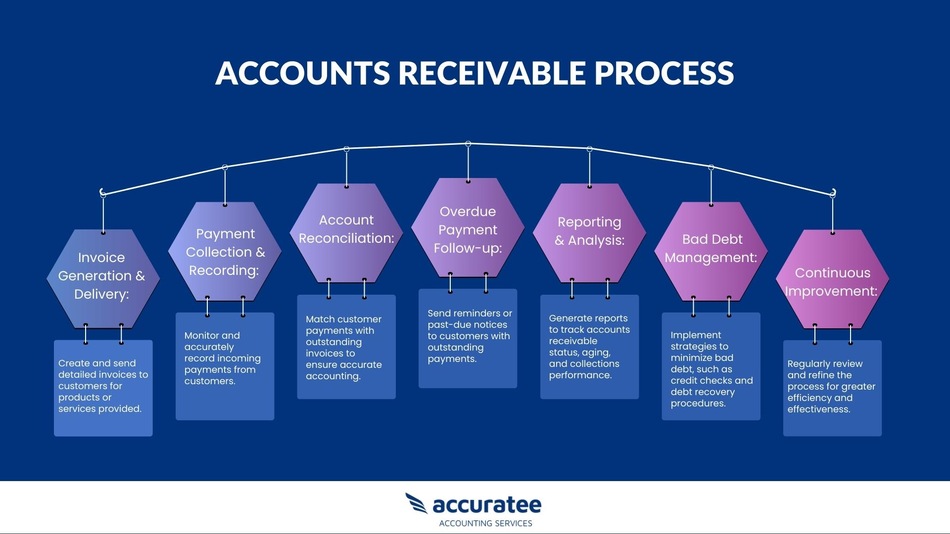
Accounts receivable process 7 steps
Here are the 7 steps of account receivable process:
What are the best practices to enhance accounts receivable management and collect payments faster?
There are several best practices that can significantly improve receivable management and speed up payment collection. Here are a few of them:
Establishing clear KPIs (Key Performance Indicators): One of the most important strategies for managing your business's accounts receivable is to have clear KPIs in place. These KPIs help you track your performance and address any issues related to unpaid invoices. A key metric to focus on in accounts receivable is debtor days. It tells you how long it takes, on average, for your customers to pay you. This metric has a significant impact on your cash flow, so a major goal should be to reduce the number of days it takes for customers to settle their payments.
In addition to debtor days, there are other metrics that deserve your attention. These include the number of overdue debts, the frequency of follow-up calls made to clients, the percentage of debts written off each month, the percentage of clients who consistently pay late, and the number of reminders sent to clients. It's important to choose the metrics that align with your company's specific needs and strive to minimise them as much as possible.
Documented agreements: Documented agreements refer to formal, written contracts between your business and the customer that clearly outline credit terms. These terms may include the credit amount, repayment schedule, interest rates, and late fees, among others. Having these agreements signed by all parties involved ensures mutual understanding, acts as a legal safeguard for collections if payment issues arise, and ultimately protects your business.
Send reminder emails: When payments are due or overdue, it's important to send polite emails to remind customers to pay their debt. This helps maintain good relationships and a steady income. Using automated payment solutions can make sending reminders easier. You can create custom emails, personalise them for each customer, and set them to send automatically. This saves time and ensures late-paying customers receive reminders without manual effort. Sending email reminders is crucial, and this optimised process makes a big impact.
Organised customer data: Keeping your customer information well-organised and easily accessible is a critical part of efficient receivable management. An accounts receivable system can provide a unified platform where all customer data is stored, enabling quick access and eliminating the need to sift through different sources of information. This approach ensures that all necessary data, such as contact details, transaction history, and communication records, are readily available for swift decision-making.
Shorter payment terms: Implementing shorter payment terms, such as reducing from 30 or 60 days to 10 days, can motivate customers to pay more quickly. This change can have a significant impact on your cash flow. The quicker the payments are received, the healthier the cash flow, which is crucial for the smooth operation of your business and to cover its expenses.
Credit analysis and insurance: If a customer becomes unreachable or consistently defaults on payments, getting help from an insurance company can be beneficial. These companies can offer protection against unexpected losses and provide valuable advice on choosing creditworthy customers. They offer solutions that mitigate credit risks, ensuring your business remains financially healthy.
Easy payment processing: To improve the customer experience and prevent payment delays, offering multiple payment options is a sound strategy. Consider integrating platforms like BPAY and PayPal, as well as EFT, for direct bank transfers. Incorporate 'Buy Now, Pay Later' services like Afterpay or Zip Pay and secure online payment portals like Stripe or Square. This strategic approach makes the payment process faster, more convenient, and more secure, increasing the likelihood of prompt payments.
Late payment fees: Introducing a policy of late payment fees can serve as a deterrent for late payments. It could encourage customers to settle their bills sooner or communicate more promptly if facing difficulties. Incorporating this policy in the initial agreement between the customer and your company can help ensure clarity and avoid future disputes.
Regular reviews: Conducting weekly reviews of your accounts receivable provides insights into the efficiency of your collection efforts. This regular check can identify potential issues early on and guide the planning for the upcoming period. Regular reviews ensure the management team stays aligned with the current state of accounts receivable and can provide timely feedback or solutions.
Hire collection agencies: Collection agencies specialise in recovering overdue debts. They use expert tactics and resources that businesses might not have, thus making debt recovery more efficient. However, they charge a fee, typically a percentage of the collected amount, so this should be considered in your decision. Using such agencies can free up your team's time, increase your cash flow by recovering debts, and allow your business to focus on its core operations, but the costs involved should be balanced against the potential benefits.
How cleanslate streamlines accounts receivable management for australian businesses?
Navigating the complexities of business accounting in Australia can be challenging, especially when it comes to managing accounts receivables. That's where CleanSlate shines.
As a leading outsourced bookkeeping service provider, we're committed to revolutionising your accounts receivables. Our expert team employs cutting-edge technology and best-in-class methodologies to simplify the process of tracking, recording, and collecting your pending payments.
With CleanSlate, you can ease your administrative burden, minimise the risk of delay payments or defaults, and optimise your cash flows. Our tailor-made accounts receivable solutions help foster your business's financial stability, allowing you to focus on growth and profitability.
Conclusion
All businesses can benefit from proper accounts receivables management to maintain a healthy cash flow and avoid the mismanagement of clients' payments. By continuing to reinforce your policies for payment, ensure that collections are handled promptly, and hold customers accountable for late payments, you can optimise and manage your cash flow more effectively.
If you are looking for a full-service receivable management solution, consider hiring CleanSlate team of experts to reduce risk, eliminate poor account receivable management practices, and save time and money. With the help of an experienced A/R staff managing your accounts receivables, you can be confident in preserving the health of your business's cash flow. Get in touch with us to know more.